
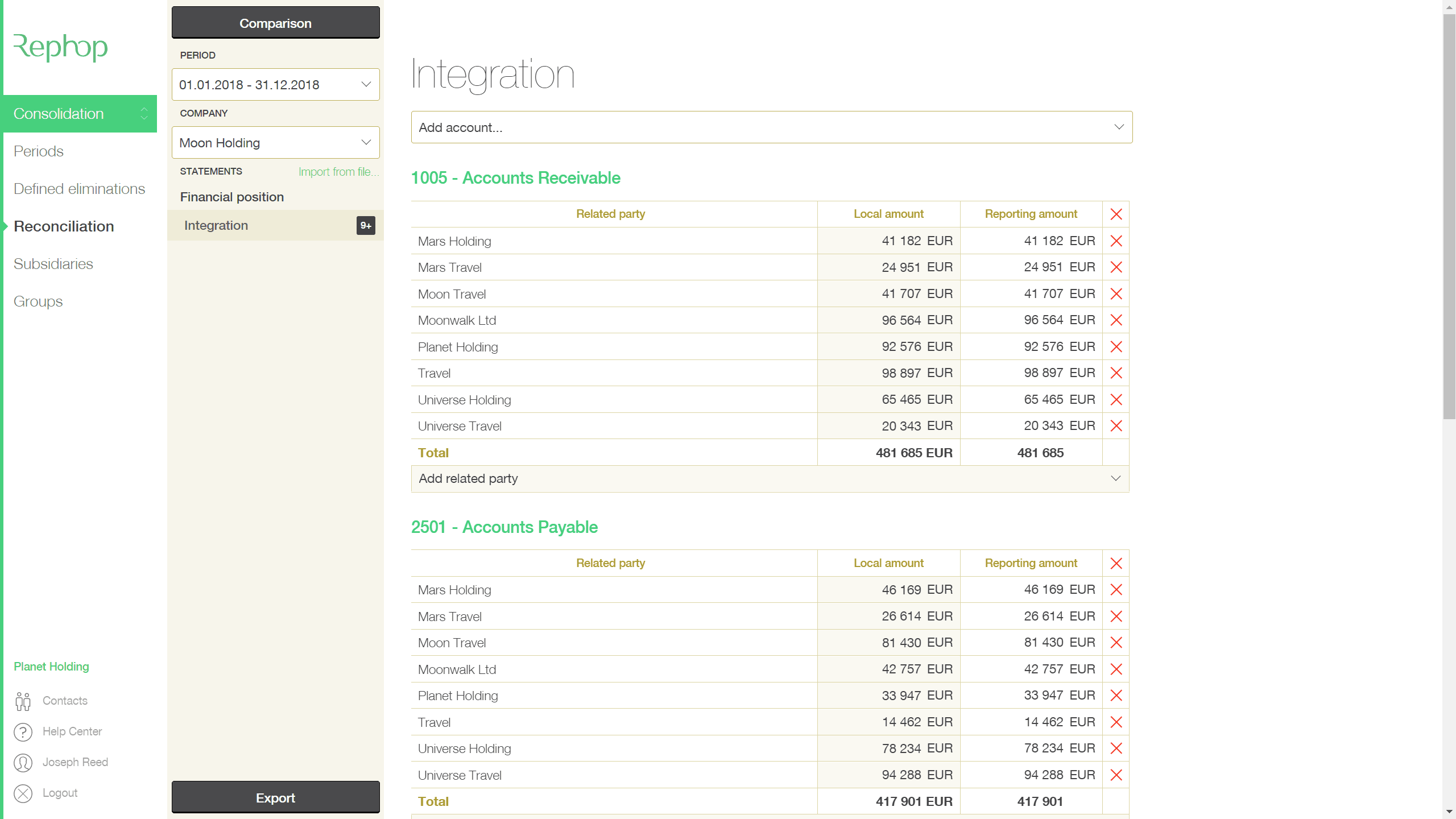
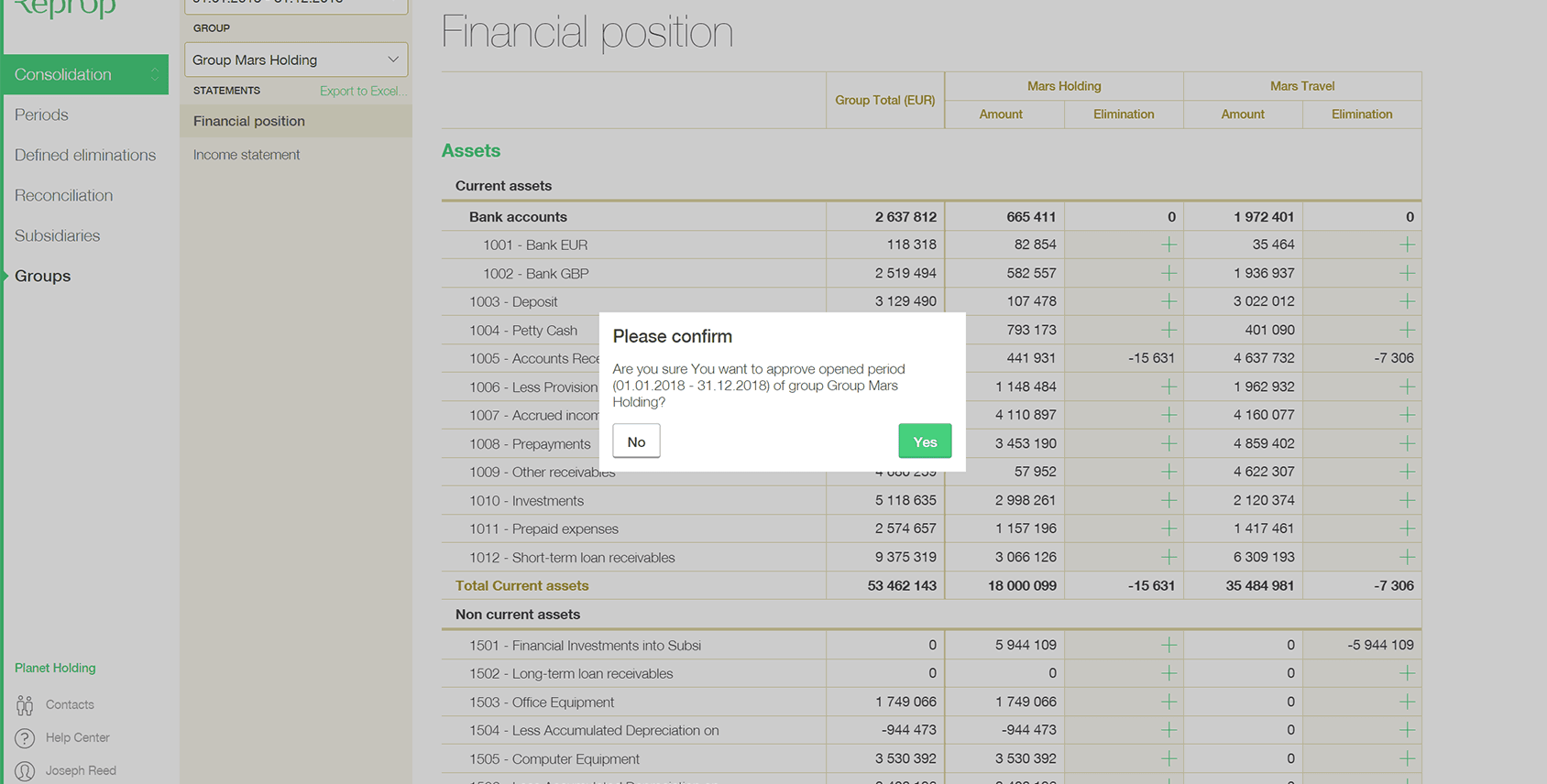
Reconcile all intercompany transactions in Rephop.
Consolidate your group figures across countries and accounting systems.
Trusted by companies around the world





Rephop handles complex consolidation entries without making the process cumbersome.
Reconcile all intercompany transactions in Rephop.
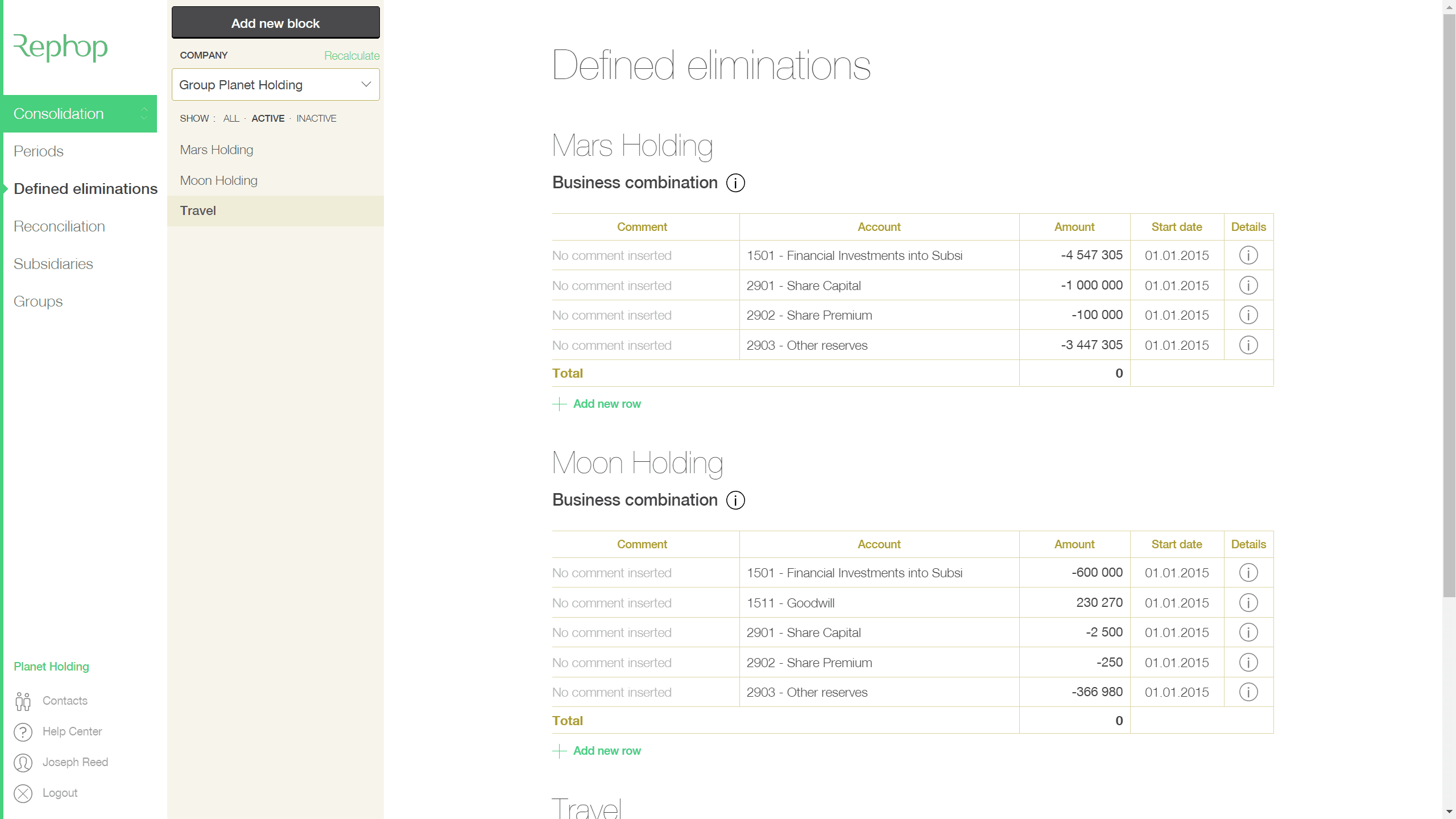
Define recurring eliminations for business combinations, group-level revaluations, asset sales, and more, then apply them automatically in every reporting period.
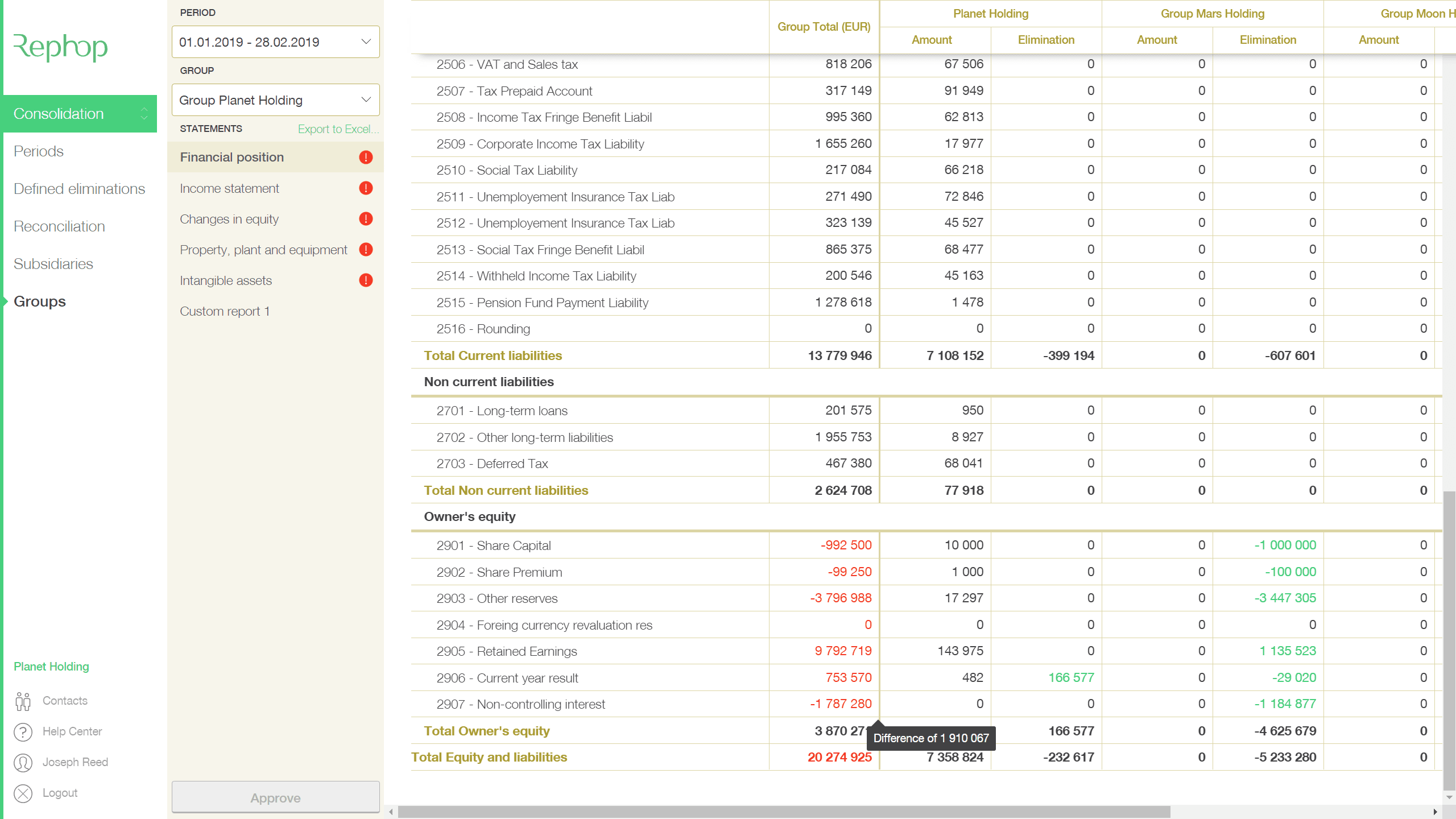
Based on your group structure, Rephop calculates non-controlling interests at every group level and handles even the most complex ownership relationships.
Transactions from subsidiaries operating in foreign currencies are translated into the group reporting currency using daily rates. Average or period-end rates can be used where appropriate.
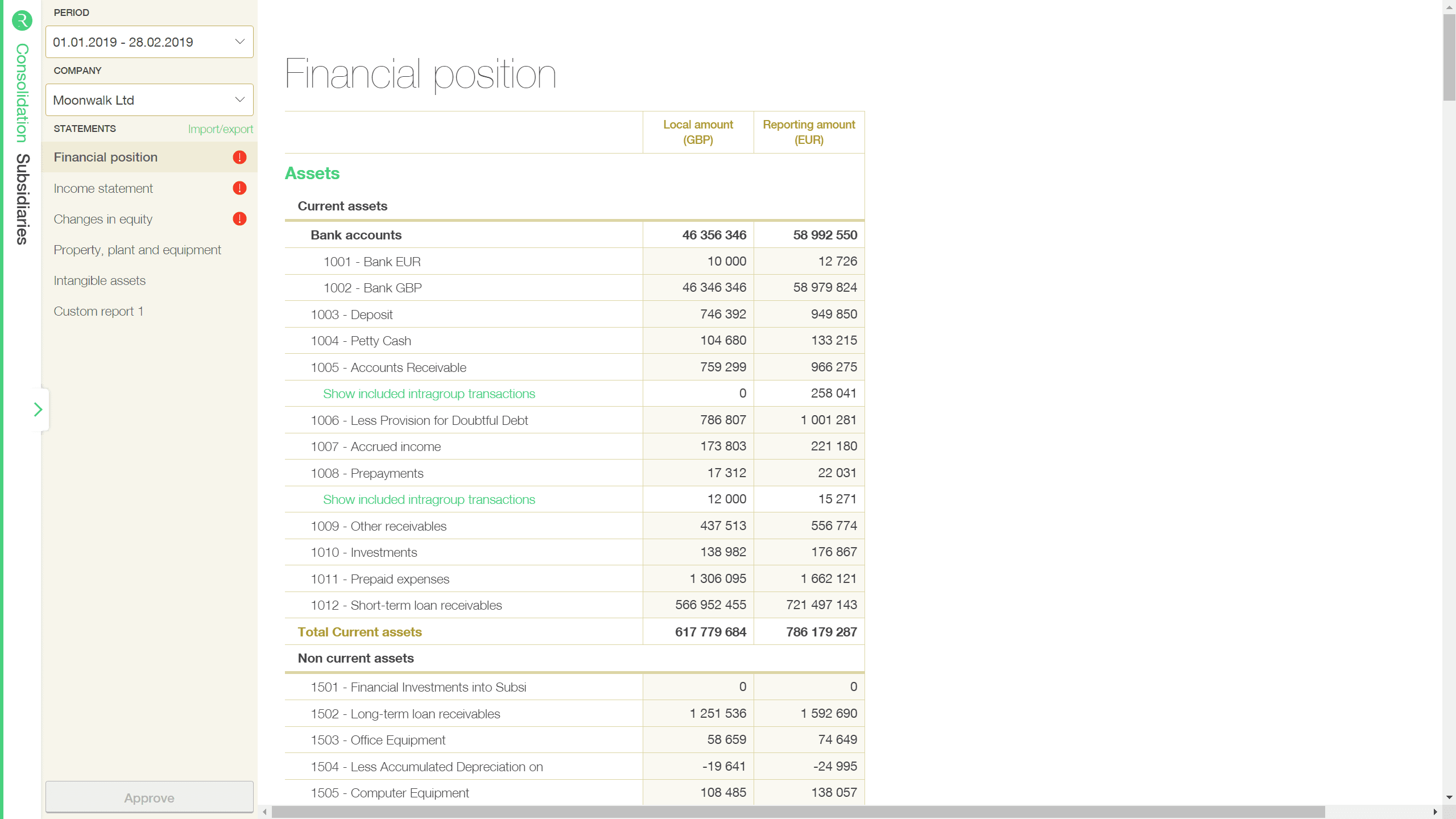
Rephop supports IFRS and US GAAP reporting. If you or your subsidiaries use local GAAP, you can record the necessary adjustments at the consolidation level.
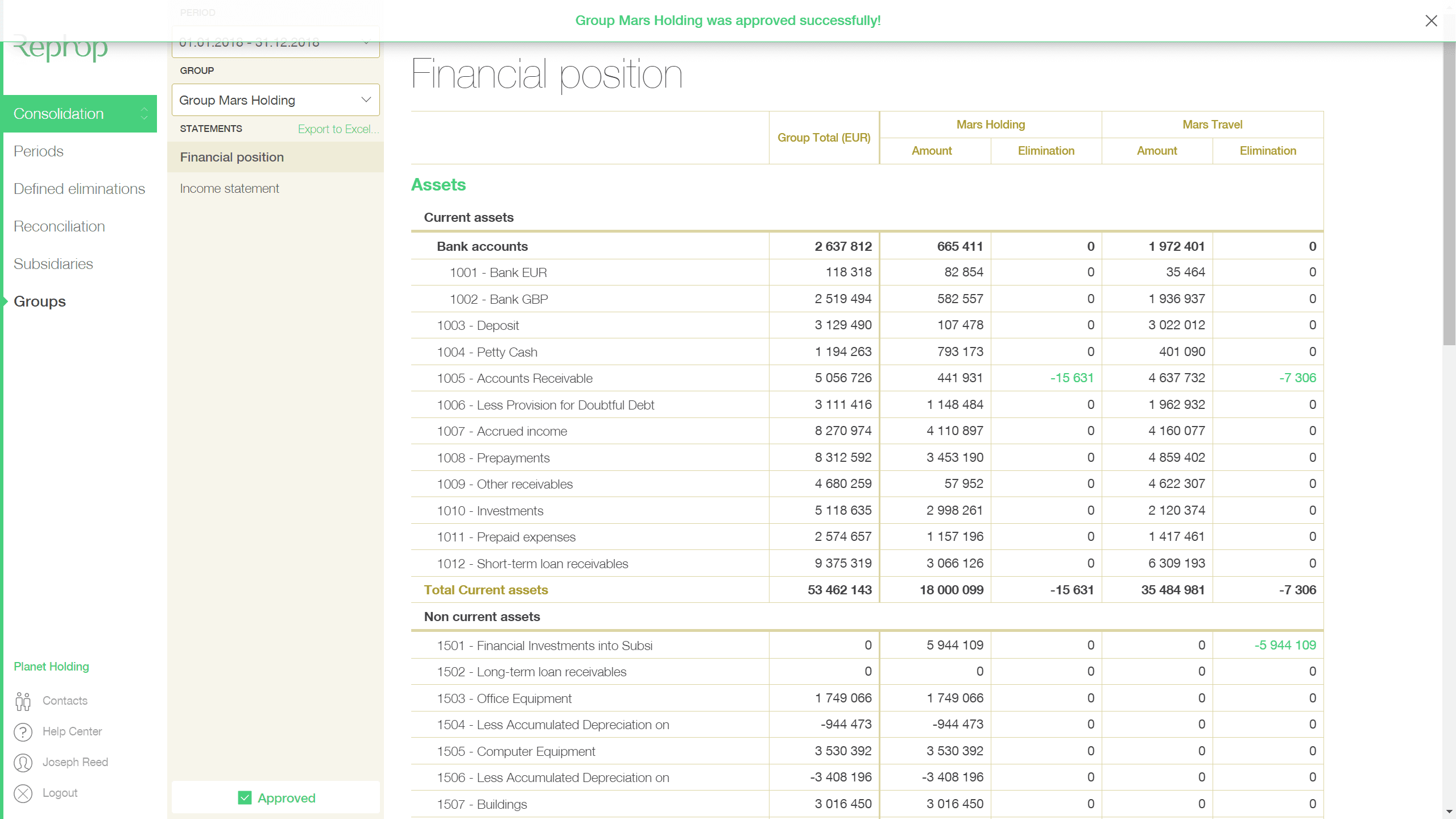
All it takes is a few clicks to see your consolidated figures. Shorten your reporting cycle by up to 52% and save up to 68% of the time spent on reporting.
Stay on top of things with planning and forecasting.
With Planning Manager, you can manage and view the entire planning process, create multiple budgets and forecasts, and import Excel models using the same operations as your actual consolidation process. It also calculates non-controlling interests and supports intercompany reconciliation.
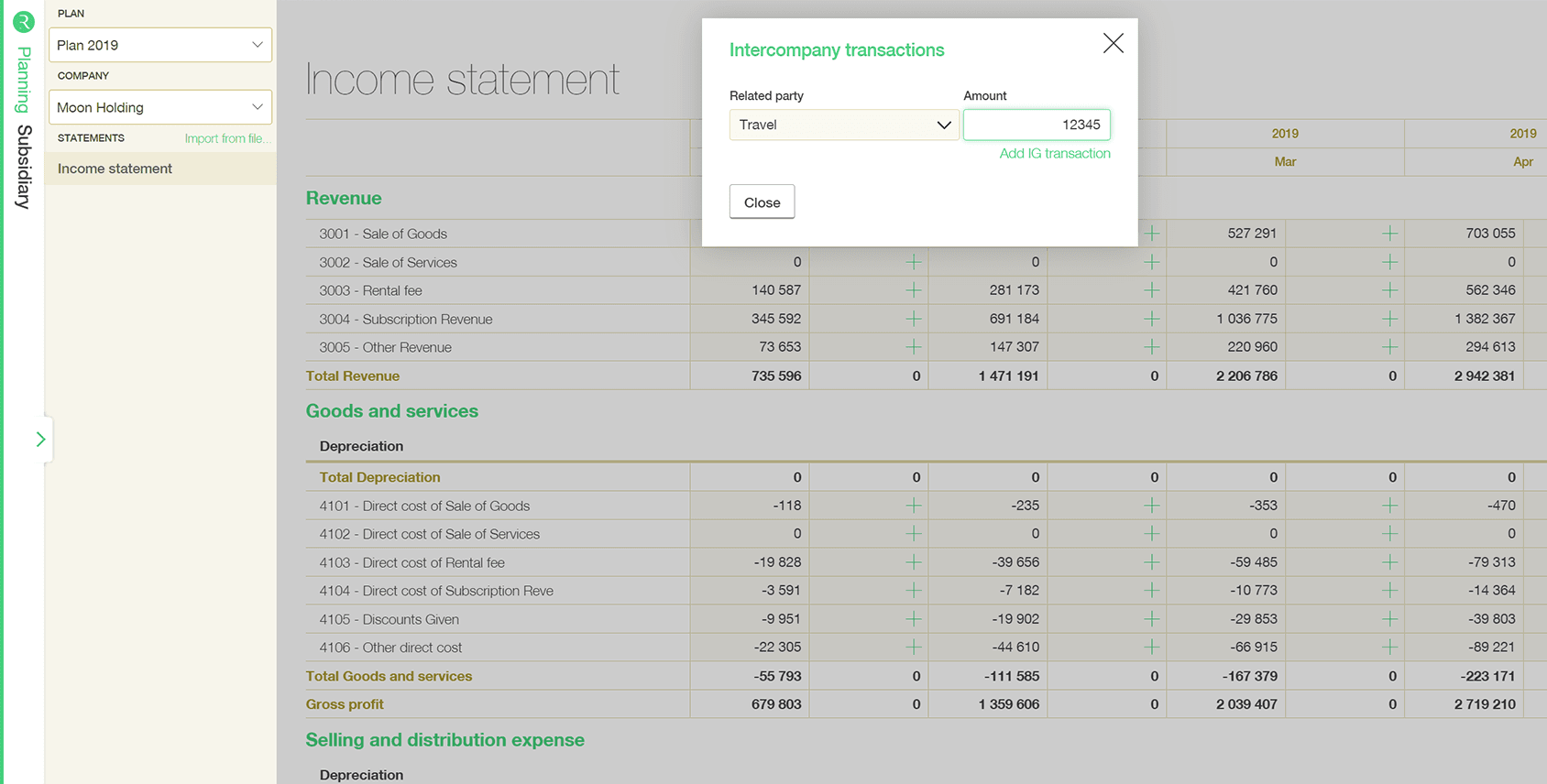
Everything you need for the financial close process.
In addition to statements of financial position and income statements, Rephop supports cash flow, changes in equity, property, plant and equipment, intangible assets, investment property, sales by country, and custom statements. Use them to make your financial close faster and more efficient.
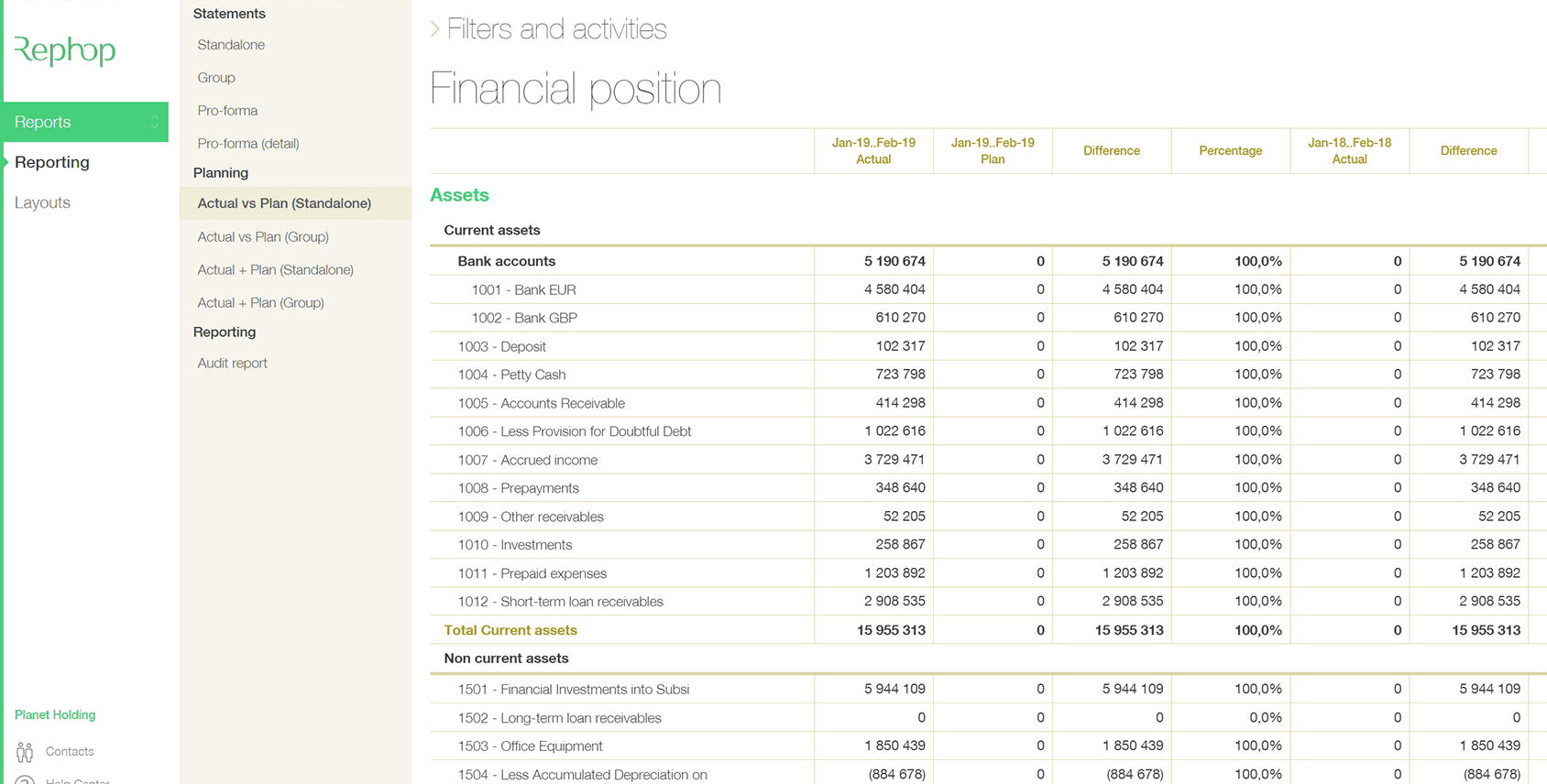
Access all your financial data from any device.
All your financial data is stored and structured in a database. Access it from any internet-connected device, then use filters to focus on the figures that matter.
Rephop is intuitive and designed in collaboration with CFOs. You do not need extensive training to get up and running—everything is self-explanatory.
Try for freeFinance teams around the world rely on Rephop to make consolidation faster, clearer, and easier to manage.
Rephop makes the consolidation process of large groups more transparent and fast. Comparison of intergroup transactions and balances is transparent, accurate and quick.
There is no maximum number of entities. Contact us for tailored pricing above 100 entities.
$299/mo
3 entities
$99 per month for each additional entity
For small groups getting started with consolidation.
Get started$745/mo
5 entities
$149 per month for each additional entity
For small and medium-sized groups.
Get started$1399/mo
7 entities
$199 per month for each additional entity
For large and multinational enterprise groups.
Get startedIf you cannot find the answer you need, email our support team at support@rephop.com.
Yes. Subsidiaries can report in their local currencies and accounting structures. Rephop translates figures into the group reporting currency and supports IFRS, US GAAP, and consolidation-level adjustments for local GAAP.
No. Rephop does not impose a maximum number of subsidiaries or entities. It supports large multinational groups and complex, multi-level structures.
Yes. Rephop uses your group structure and period figures to calculate non-controlling interests automatically.
Yes. Rephop is a cloud platform available to customers worldwide, regardless of where the group's headquarters are located.
Ad hoc reporting is consolidation on the fly. Rephop uses your figures and elimination rules to create a consolidated report for a different group structure. This lets you report consolidated results by country, business unit, or another dimension, regardless of your legal group structure.
Yes. You can cancel at any time. We bill only for the days you used the service.
Yes. Set up recurring eliminations once, and Rephop applies them automatically in each consolidation period.
Rephop supports consolidation at multiple levels. You can consolidate subgroups before rolling them up into the top-level group. One level means consolidation occurs only at the top level, with no subgroups. Two levels means subgroups are consolidated before the top-level consolidation, and unlimited levels means nested subgroups with no depth limit.

